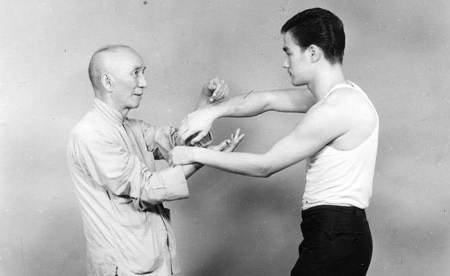
In Hawaiian Shaolin Kempo, developing sensitivity, balance, and adaptability is just as important as learning to strike or block. One of the most effective ways to cultivate these qualities is through a family of energy-sensing drills often referred to as Pushing Hands. These exercises train practitioners to feel, redirect, and ultimately control an opponent’s force without relying on brute strength. In this softness, we find actual martial efficiency. In an overbearing force, we often see failure.
Shaolin Kempo includes three primary variations of Pushing Hands drills. Each teaches unique attributes but shares a common theme: maintaining contact, reading the opponent’s energy, and finding the path of least resistance to unbalance and control.
1. Pushing Hands (Tai Chi-Inspired)
This version, influenced by—but not identical to—the Tai Chi Pushing Hands drill, focuses on sensing and redirecting force through circular, grounded motion. Partners maintain contact and alternate between pushing and yielding. The goal is to destabilize your partner by subtly disrupting their balance through precise timing and fluid motion.
With continued practice, you begin to recognize the “wave” of force that builds with push and pull. Instead of resisting it, you learn to channel it, allowing the opponent’s momentum to compromise their structure.
2. Sticky Hands
This version is the first drill we teach at our school and serves as the foundation for developing sensitivity and striking reflexes from a fixed position. Partners maintain wrist contact at all times: the drill blends blocks, strikes, and subtle shifts in pressure.
Over time, Sticky Hands trains you to detect openings in your partner’s defense solely by feel. Practicing with your eyes closed further develops tactile sensitivity and balance awareness—skills that translate directly to self-defense situations where speed and awareness trump brute force.
3. Rolling Hands
Rolling Hands takes the principles of sensitivity into a more dynamic and combative context. The goal here is to apply wrist locks, traps, and counters in a flowing exchange while maintaining awareness of strikes and your partner’s attempts to unbalance you. Unlike Sticky Hands, this drill incorporates footwork, allowing for positional adjustments, escapes, or entries into finishing techniques.
Rolling Hands is a bridge between compliant drills and live application, refining your timing, body control, and joint manipulation under pressure.
Unified Purpose: Defend, Distract, Unbalance
All three drills serve the same purpose: to build control through connection. By maintaining physical contact, you learn to sense your partner’s balance, intention, and movement. When done correctly, these drills teach you the third step of conflict resolution—to unbalance the opponent, which naturally follows defense and distraction. Once an opponent is uprooted or destabilized, their ability to attack or resist diminishes.
These sensitivity drills develop qualities that strikes alone cannot teach—timing, patience, control, and awareness.
Have you found benefit in these partner drills? Have they changed the way you spar or apply techniques? Share your thoughts and experiences in the comment section below—we’d love to hear how these practices have helped you grow as a martial artist.


One thought on “The Three Forms of Pushing Hands in Hawaiian Shaolin Kempo”
Comments are closed.